THE NOOMA WAITLIST IS NOW OPEN. Founding Members lock in 25% off. Permanently.


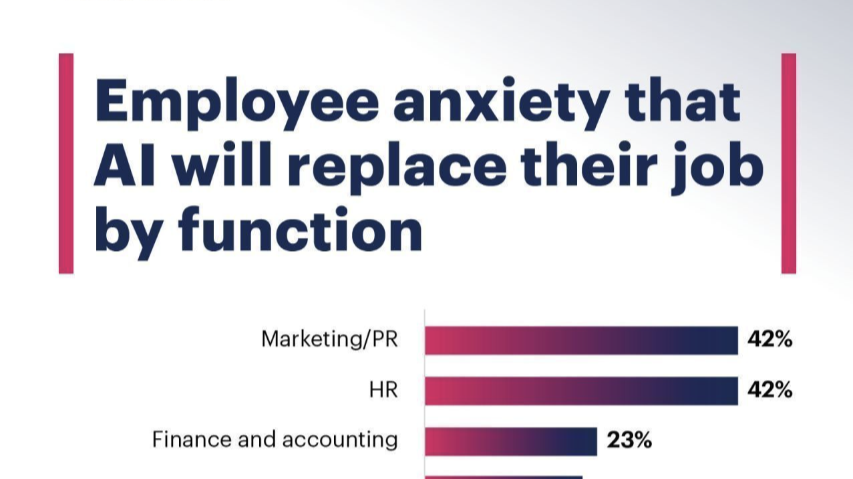
The problem isn’t AI. It’s traditional HR technology’s focus on employee data management, which has left many HR professionals without the tools or confidence to integrate AI into everyday HR practice. It is the uncertainty about what AI in HR actually looks like in practice that creates the fear. In this context, AI in HR refers to the use of artificial intelligence to support HR decision-making, documentation, compliance, and workflow execution, while accountability remains with people.
Gartner’s recent research highlights this anxiety clearly. HR professionals are among the most concerned about AI replacing their roles, not because their work lacks value, but because the profession has not yet been given a convincing, practice‑focused model for how AI should be used responsibly, safely, and effectively in HR as the future of HR continues to evolve.
HRIS and HCM platforms are systems of record, and they are critical to compliance, enterprise governance, and core HR operations. In Australia, payroll accuracy, records management, auditability, and Single Touch Payroll obligations are foundational and non‑negotiable. HCM platforms have delivered enormous value over decades by automating these requirements at scale, and they remain essential to how organisations operate safely and lawfully.
This matters. Employee data must be accurate, secure, auditable, and well governed. HRIS and HCM platforms have solved this problem at enterprise scale, and they should continue to do so.
At the same time, HRIS and HCM platforms were never designed to support the practice of HR. They were designed for the enterprise.
The practice of HR is judgment‑heavy, risk‑sensitive, and deeply human. HR practice is judgment‑heavy, risk‑sensitive, and deeply human. It happens in investigations, grievances, restructures, performance decisions, workforce planning, and cultural stewardship. This work requires guidance, consistency, and care, not just data capture.
Much of this work still happens off‑system, supported by individual capability, experience, and confidence rather than structured, visible practice. When AI is introduced without addressing this reality, uncertainty grows. HR professionals are asked to adopt powerful tools without a clear understanding of how those tools should support professional judgment, manage risk, or preserve accountability.
Ironically, it is this very work that is most likely to protect the HR profession from large‑scale job displacement by AI and concerns about AI replacing HR jobs, provided practitioners know how to use AI effectively within their practice.
Judgment, ethical decision‑making, risk assessment, and human care are not easily automated. When AI is designed to guide practice rather than replace it, it can strengthen consistency, improve compliance, and reduce administrative burden while keeping responsibility firmly with people.
This is not about resisting technology. It is about designing and adopting it well.
HR has a significant opportunity to shape how human and machine capabilities are designed, governed, and applied inside organisations through clear AI governance in HR. That opportunity extends beyond adopting tools. It includes defining where AI should assist, where it should stop, and how accountability is maintained in complex, high‑risk human decisions.
Meeting that obligation requires curiosity, not fear. It requires HR professionals to engage deeply with how their work is actually done, and to seek out systems and approaches that support practice, not just compliance.
The future of HR will not be determined by how quickly AI is adopted, but by how clearly it is integrated into professional practice. When HR can make its work visible, measurable, and trusted, AI becomes an enabler rather than a threat. This is a significant opportunity for the profession to strengthen its impact, credibility, and value in the human‑machine era.
If you are struggling to integrate AI into your HR capabilities or HR practice, reach out I am always happy to share practical tools and approaches that may help.